
AI Research Technologies: Exploring Data Pipelines, Training Workflows, And Deployment

Deployment processes, infrastructure requirements, and experiment lifecycle in AI research technologies: Exploring Data Pipelines, Training Workflows, and Deployment
Deployment processes describe how trained models are packaged, served, and monitored in environments used for further testing or production evaluation. Packaging approaches frequently involve containerization to freeze runtime dependencies and model artifacts. Serving layers can be lightweight inference scripts for interactive experiments or production-grade APIs managed by orchestration platforms for scale. Researchers may use staged rollouts or canary tests when evaluating models under realistic traffic patterns. Discussions of deployment emphasize traceability and isolation to ensure that experiments do not inadvertently impact other systems.
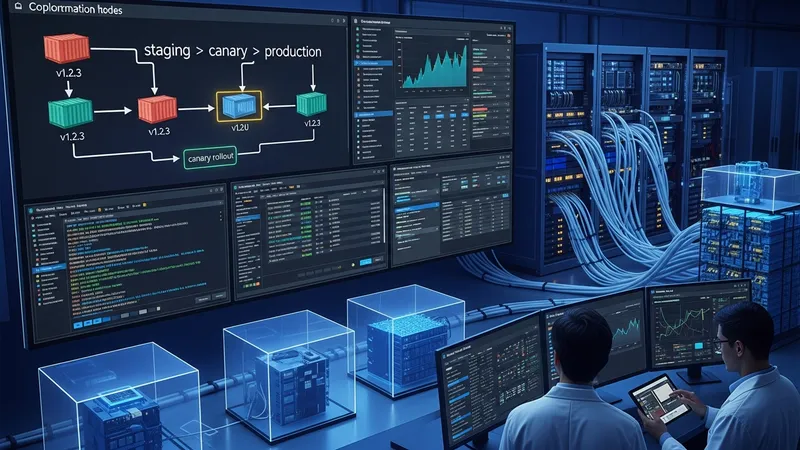
Infrastructure requirements often depend on model complexity and expected throughput. GPUs or specialized accelerators may be used for inference in some research evaluations, while CPU-based serving may suffice for small-scale testing. Storage and network considerations are also relevant when models require large datasets or when serving must support streaming inputs. Researchers commonly document resource footprints of candidate models to inform infrastructure decisions and to estimate reproducibility costs for others attempting similar experiments.
Monitoring and observability are important for understanding deployed model behavior and for informing new research iterations. Metrics such as latency, throughput, input distributions, and key performance indicators from evaluation suites may be logged and analyzed. Telemetry can reveal performance degradation or unexpected behaviors that warrant retraining or reevaluation. As a consideration, researchers often balance the granularity of telemetry with storage and analysis costs, choosing to log detailed traces selectively for targeted investigations.
Experiment lifecycle management spans from initial data collection through training, evaluation, and eventual deployment or archival. Maintaining clear links between dataset versions, experiment records, model artifacts, and deployment manifests helps preserve reproducibility and institutional memory. Researchers may adopt conventions for artifact naming, metadata schemas, and retention policies to support long-term research programs. These practices are presented as considerations that can be adapted to project scale and available resources, aiding methodical progression through research cycles.