
CSPM Solutions: Understanding Cloud Security Posture Management Fundamentals

Visibility, Metrics, and Continuous Improvement
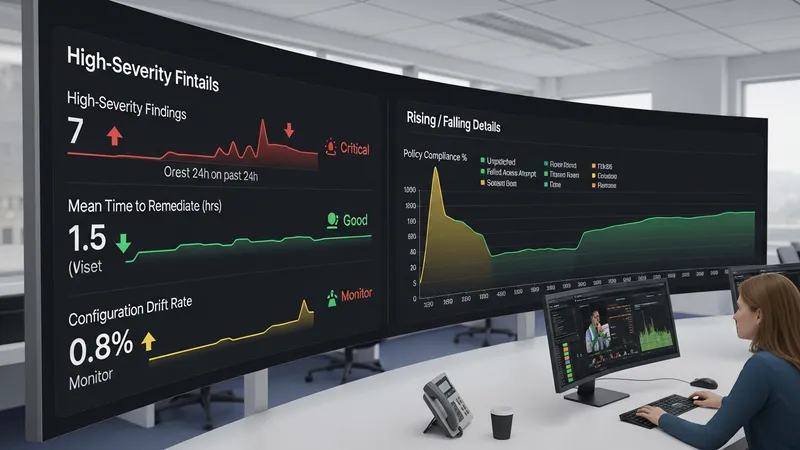
Visibility into posture relies on coherent metrics that reflect both current state and trends. Common metrics include number of high-severity findings, mean time to remediate, percentage of resources in compliance with critical policies, and rate of configuration drift. Tracking these metrics over time helps identify recurring issues and the effectiveness of remediation processes. Data visualisations can make trends clearer, but metric selection generally aligns with organisational risk priorities to avoid noisy or irrelevant indicators.
Continuous improvement cycles use findings and metrics to refine policies, scanning coverage, and operational workflows. Retrospective analysis of incidents and recurring misconfigurations often reveals gaps in developer training, IaC templates, or default provisioning scripts. Addressing root causes—rather than only treating symptoms—may reduce recurrence and improve overall posture. Iterative reviews of policy coverage and scan rules are standard practice in maturing programmes.
Insider considerations include credential management for scanning tools, API rate limits, and the potential for scan-induced costs. Credential scope should follow least-privilege principles to reduce blast radius, and scanning schedules may be tuned to balance timeliness with provider limits and cost. Recording test outcomes and storing evidence in secure, access-controlled locations supports both operational review and audit needs without creating unnecessary exposure.
Finally, cross-functional collaboration among security, platform, and application teams often strengthens posture outcomes. Shared ownership models, regular governance meetings, and accessible findings help integrate posture management into normal engineering cycles. This collaborative approach typically supports more sustainable remediation practices and better alignment between security objectives and operational realities.