
Microsoft SSPM: Overview Of SaaS Security Posture Management Concepts

Security posture management for software-as-a-service (SaaS) environments refers to methods and tools that gather configuration, identity, and usage data from cloud-hosted applications to produce a coherent view of security risk. In plain terms, this concept involves continuously discovering SaaS instances in use, assessing their configuration against defined settings, and mapping who has access to which data and features. The goal is to reduce misconfigurations, surface risky permission assignments, and provide operators with information to prioritize remediation. When discussed in a Microsoft context, these activities often tie into Microsoft cloud tooling and identity systems while remaining compatible with third-party SaaS services.
At an operational level, SaaS security posture management commonly combines automated scans, API integrations, and policy checks. Scans may examine application configuration (for example, sharing settings or enabled integrations), identity mappings (roles, groups, or external collaborators), and telemetry (suspicious sign-in patterns or anomalous app activity). Results are typically presented as prioritized findings or posture scores that indicate where configuration drift or risky exposures exist. These systems often integrate with broader security operations workflows so that identified issues can be tracked, investigated, and, where appropriate, remediated.
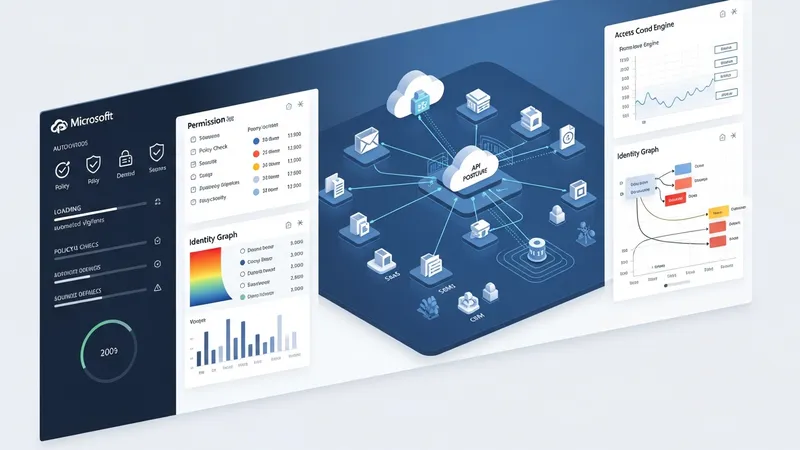
- Microsoft Defender for Cloud Apps (Cloud App Security) — SaaS discovery and control with integrated API connectors and activity monitoring, often used to correlate app telemetry and conditional access signals.
- Microsoft Entra ID governance and entitlement management — Identity lifecycle, access reviews, and role management features that can reduce excessive permissions tied to SaaS accounts.
- AppOmni — A third-party SaaS security posture management vendor that integrates with major SaaS providers to assess configurations and access posture across enterprise applications.
Automated connectors and APIs are central to many SaaS posture assessments. Connectors may use read-only APIs to enumerate configuration and permissions, and they typically respect the vendor’s authorization model. In Microsoft-related implementations, connectors can ingest telemetry from Microsoft cloud services and merge that with app-level configuration data. Analysts often treat connector coverage and API rate limits as practical constraints: some settings may not be exposed via APIs, and continuous collection can be paced to avoid hitting service limits. These practical constraints can affect the frequency of assessment and the granularity of findings.
Scoring and prioritization models commonly apply rules to raw findings so that teams can focus on higher-risk items first. A posture score may combine factors such as the sensitivity of exposed data, the breadth of privileged access, and evidence of anomalous activity. Organizations often calibrate those rules to match internal risk appetite and compliance requirements, and scoring models can be layered with contextual data—such as asset criticality or recent threat indicators—to refine prioritization. Careful calibration may reduce false positives and align remediation efforts with operational capacity.
Identity-focused controls are often a primary vector for reducing SaaS risk. Access reviews, conditional access policies, and least-privilege role assignments can remove excessive entitlements that lead to exposure. When identity systems are integrated with posture tooling, automated alerts may surface stale accounts, guest users with broad permissions, or service principals with unexpected privileges. Human review processes — such as periodic attestation or role approval workflows — may complement automated checks to validate exceptions and document risk acceptance in a governance context.
Integration with compliance frameworks is a common use case for SaaS posture management. Tools can map configuration states to control objectives in frameworks such as SOC, ISO, or regulatory requirements, thereby producing evidence artifacts for auditors. Automated reporting can highlight areas where a SaaS application does not meet control baselines, and tracking over time may demonstrate remediation progress. This mapping is typically advisory rather than definitive: auditors and compliance teams usually evaluate artifacts in the context of organizational policies and compensating controls.
In summary, the concept described combines continuous discovery, configuration assessment, identity analysis, and policy mapping to form a practical approach for reducing SaaS security risk. Examples span native Microsoft services and third-party SSPM products that integrate with Microsoft identity and cloud platforms. The next sections examine practical components and considerations in more detail.