
SaaS Security Posture Management: How It Helps Organizations Monitor And Reduce SaaS Risk

Policy enforcement, compliance mapping, and operational integration
Policy enforcement connects posture findings to organization-level rules and to applicable regulations by mapping detected issues to control objectives. This mapping helps teams prioritize remediation that has both security and compliance implications. Many organizations establish a small set of continuously monitored controls that represent the highest risk or most frequent audit requirements, while other controls are validated on a scheduled basis. Consideration: maintain versioned policy templates and document mappings so that evidence of compliance can be reproduced for audits.
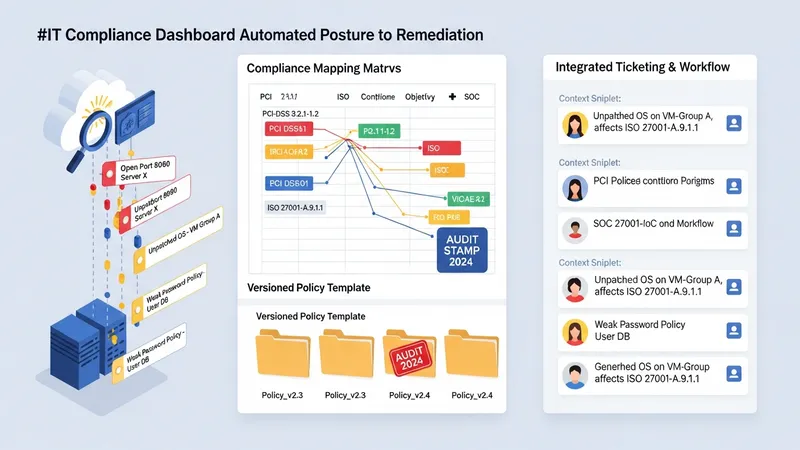
Operational integration involves feeding posture outputs into change management, ticketing, and incident response workflows so that identified issues are tracked to closure. Typical integrations include generating tickets with context-rich findings, attaching remediation steps, and updating risk registers. This reduces manual handoff and helps teams measure time-to-remediate metrics. Teams may also set service-level priorities that reflect business criticality to ensure limited resources target the most impactful items first.
Compliance mapping often requires translating platform-specific misconfigurations into standard control language. For example, a sharing setting or an OAuth consent may map to an access control or third-party risk control in an organizational framework. Maintaining these mappings as living documents enables consistent reporting and supports auditors who request samples of evidence. Consideration: include owners in mapping reviews so they understand how platform settings affect compliance indicators.
Final operational considerations include ensuring that enforcement mechanisms themselves are auditable and that any automated remediation is reversible and logged. When automated fixes are applied, retain change records and approvals to avoid confusion. Over time, teams frequently refine which issues are remediated automatically versus escalated for human review, balancing speed with caution to avoid unintended impact on business workflows.