
SSPM Solutions: Managing SaaS Misconfigurations, Access Controls, And Data Exposure

Detection and management of SaaS configuration issues
Detecting configuration issues begins with inventorying connected SaaS applications and their settings. Inventory processes may use provider APIs or service account credentials to list enabled features, sharing settings, and security controls. Common indicators of concern include public sharing options enabled on storage, single-factor authentication on sensitive apps, and administrative roles assigned to service accounts. Organizations may categorize findings by impact and likelihood so that limited resources focus on the most consequential misconfigurations. Consider API rate limits and permission scopes when planning scan cadence, as these technical limits can influence what can be detected automatically.
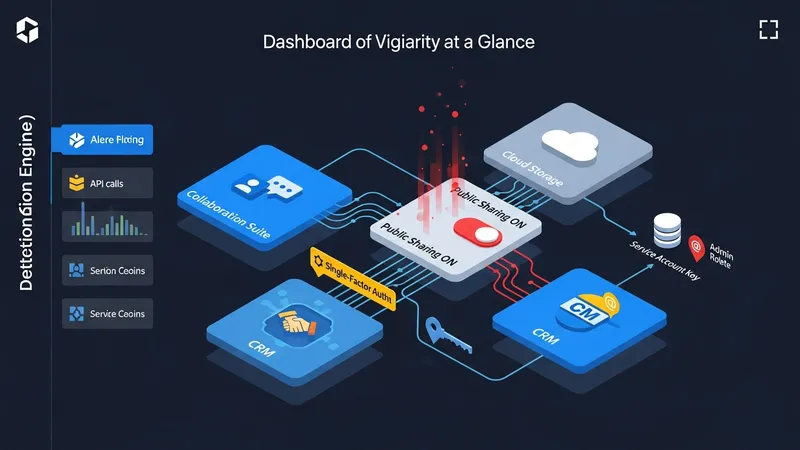
Different SaaS platforms expose different configuration surfaces, so detection rules often need tailoring. For example, collaboration suites may have many sharing and link options to evaluate, while CRM systems may require checks on API token usage and field-level encryption. Detection engines that interpret provider-specific APIs can map disparate settings into a consistent policy model, which can help teams compare posture across multiple applications. Maintaining mapping logic may require periodic updates as vendors change APIs or add features.
Management of identified issues can follow several models: automated correction, human-reviewed remediation, or staged fixes with rollback options. Automated corrections may address low-risk misconfigurations such as disabling anonymous sharing, while higher-risk changes commonly go through review workflows. Integrations with ticketing systems, identity platforms, and configuration management tools can help ensure that remediation actions are documented and auditable. Teams should also plan for verification scans after remediation to confirm changes persist.
Operational considerations include scan performance, false positive rates, and the effort required to validate findings. Many teams adopt tuning cycles where detection rules are refined to reduce noise and focus on patterns that historically preceded incidents. It may be useful to correlate configuration findings with access logs; a permissive setting that has not been used could be ranked lower than a permissive setting that has generated frequent external links or API calls. These correlations can help prioritize limited remediation bandwidth.