
Employee Monitoring Software: Key Features, Functions, And Use Cases

Reporting, dashboards, and administrative functions in monitoring systems
Reporting and dashboarding components transform raw activity logs into interpretable summaries such as weekly usage trends, busiest application categories, and exception lists for attendance. Dashboards often allow filtering by team, project, or time period and may support scheduled exports for review. Administrative functions typically include role-based permissions for who can view or export data, audit trails for report access, and configurable alerting thresholds. These features may help operational staff detect capacity bottlenecks or unusual patterns that warrant further investigation.
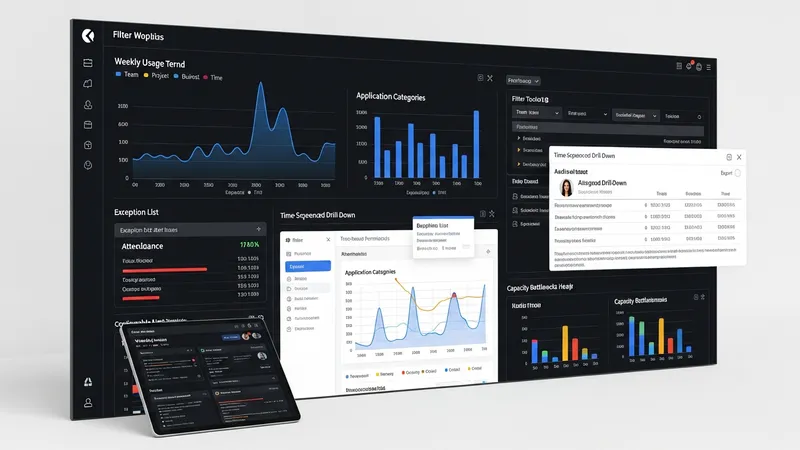
Design choices for dashboards commonly focus on clarity and contextualization rather than exhaustive detail. Effective dashboards may provide both high-level summaries and the ability to drill into time-sequenced records when necessary. Administrators often configure templates for recurring reports to ensure consistency across review cycles. It is typical for organizations to supplement automated reports with narrative context from managers or project leads to reduce misinterpretation of quantitative indicators.
Export and archival capabilities are practical administrative features for compliance and audit readiness. Monitoring platforms may support CSV, JSON, or PDF exports and configurable archival policies that govern how long raw logs are retained. Retention durations are often aligned with internal policies or regulatory requirements and may vary across data types (for example, event logs versus summarized metrics). When planning retention, organizations commonly balance forensic utility against storage costs and privacy considerations.
Access control and governance are recurring administrative considerations. Systems usually allow administrators to define roles such as analyst, manager, or auditor, each with tailored viewing permissions. Logging of administrative actions—who accessed which reports and when—can support internal governance and accountability. A practical tip is to periodically review access lists and retention settings to ensure they remain aligned with evolving organizational roles and regulatory expectations.