
Employee Monitoring Software: Key Features, Functions, And Use Cases

Feature categories and technical approaches relevant to employee monitoring
Feature categories in employee monitoring systems usually map to distinct technical approaches: endpoint agents, network monitoring, cloud service integrations, and manual input. Endpoint agents run on user devices and can capture detailed application focus, process names, and local activity, while network monitoring inspects traffic patterns and destination domains at an infrastructure level. Cloud integrations may collect activity logs from collaboration platforms and email services. Manual input options like timesheets remain part of many deployments to capture work that occurs off-device. Each approach may offer different fidelity, deployment complexity, and privacy implications.
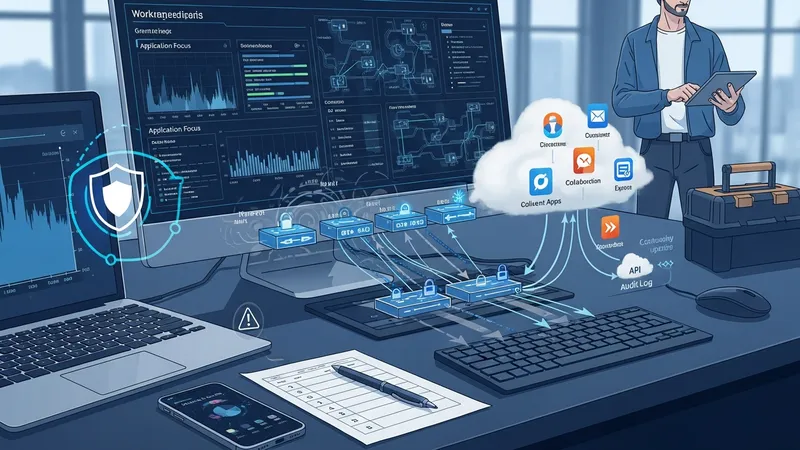
Endpoint agents can provide granular timelines and interaction data but may raise higher administrative overhead for deployment and updates across diverse device fleets. Network-based approaches often capture cross-device patterns without installing software on each endpoint, though they may miss activities on encrypted channels or personal devices. Cloud integrations are increasingly common as remote work uses web-based collaboration tools; APIs from major platforms can supply audit logs or usage metrics. When selecting approaches, organizations often weigh coverage, data granularity, and maintainability rather than assuming a single solution covers all needs.
Data processing and storage architectures for monitoring systems typically involve local buffering, centralized ingestion, and indexed storage for querying. Some deployments process data on-premises to align with internal policies, while others use hosted analytics platforms that may simplify scaling and dashboarding. Data retention settings, anonymization options, and role-based access controls are common administrative safeguards. Architects often design retention and access policies to balance operational analytics needs with privacy obligations and storage cost considerations.
Interoperability with existing IT systems is frequently an important practical consideration. Common integrations include single sign-on, human resources information systems (HRIS), payroll platforms, and ticketing systems. These integrations can streamline workflows like time-off reconciliation or access revocations, but they may require mapping fields and aligning update frequencies. As an operational detail, organizations may prototype integrations with limited teams to validate data flows before broader rollout, which can reduce unforeseen workload and alignment issues.