
Lathe Machine: Guide To Turning Operations, Tools, And Cutting Parameters

Lathe Machine: Safety, Maintenance, and Common Manufacturing Uses
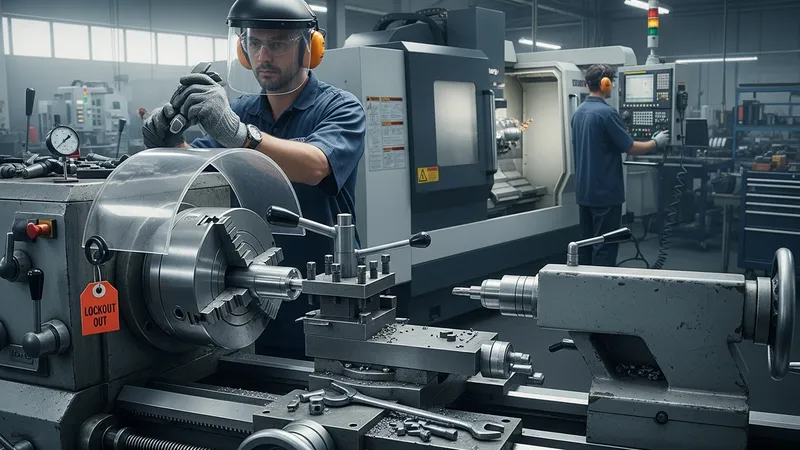
Safety practices align closely with machine type and operation. Basic safeguards include ensuring guards are in place, selecting appropriate personal protective equipment, and avoiding contact with rotating parts. On conventional lathes, operators may be more exposed to manual tool changes and must follow lockout procedures during setup. CNC machines typically incorporate interlocks and enclosures that reduce direct exposure, but programmers and operators remain responsible for safe program verification and proper fixturing to prevent thrown workpieces.
Routine maintenance supports predictable performance across the machine types introduced earlier. Maintenance tasks typically include lubrication of ways and headstock bearings, inspection of spindle runout, checking tightness of chuck jaws and turret mechanisms, and cleaning coolant systems to prevent pump or nozzle blockages. Scheduled inspections and record-keeping for tool holders and spindle condition can help identify wear trends before they affect part quality. Such practices often reduce unplanned downtime and contribute to stable machining conditions.
Common applications across these lathes include shafts, bushings, threaded components, and stepped geometries that require concentricity and controlled surface finish. CNC lathes may produce complex profiles and integrated features where tolerances are critical, while turret lathes may be selected for repetitive operations on simpler turned parts. Conventional engine lathes remain valuable for maintenance work, custom one-off parts, and situations where fixturing or part access is more readily managed by an operator than by automated tooling.
Overall, combining attention to safe operation, consistent maintenance, and process documentation helps maintain part quality and machine availability. Practitioners often use a mix of these lathe types within a facility to match process needs with machine capabilities, and iterative measurement and adjustment are typical to refine cutting parameters and tooling choices over time. The article has focused on descriptive, operational considerations to help readers understand how machine type, tooling, and setup interact in turning processes.