
Lathe Machine: Guide To Turning Operations, Tools, And Cutting Parameters

Lathe Machine: Workholding, Tool Geometry, and Setup Considerations
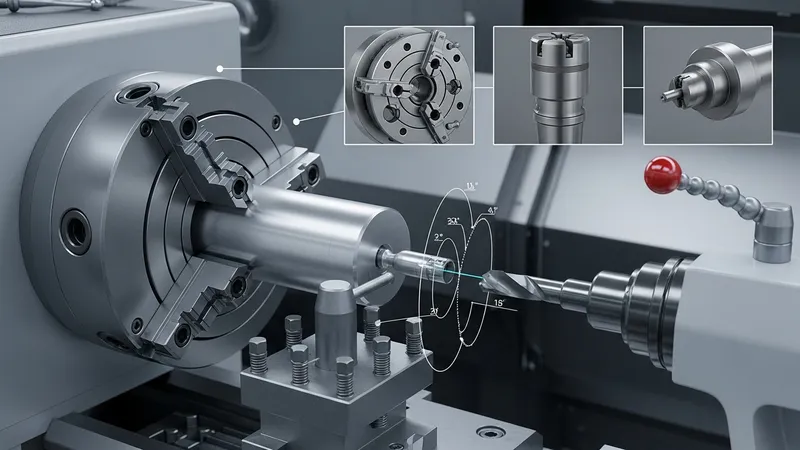
Workholding choices introduced on the first page—chucks, centers, and turret-mounted fixtures—affect runout, concentricity, and vibration. Three-jaw chucks are common for cylindrical parts with reasonable concentricity, while four-jaw independent chucks allow off-center and irregular shapes. Collets offer high repeatability for short, consistent-diameter parts. Tailstock support with centers or live centers typically reduces deflection on long slender workpieces. Each method may require attention to clamping torque and seating to avoid distortion or slippage during cutting.
Tool geometry must match both the operation and the workholding arrangement. Rake and clearance angles influence cutting forces and surface integrity; a neutral or slightly positive rake may reduce forces on flexible setups, while tougher negative-rake geometries may be preferred for interrupted cuts. Insert nose radius affects surface finish and form accuracy; larger radii can improve surface finish but may increase cutting forces. Proper tool overhang and holder rigidity are considerations to minimize chatter, particularly on long-reach setups.
Setup procedures often begin with ensuring spindle and tailstock runout are within acceptable tolerances and that clamping devices are clean and functioning. Tool offsets and zero references are established using indicators or probe systems, especially on CNC lathes. For turret lathes, indexing repeatability and turret backlash are monitored because small errors can accumulate across sequential operations. Documenting setup steps and verifying critical dimensions before full production runs is a common practice to reduce scrap and rework.
Secondary considerations include balancing of long parts, guarding against chip entanglement, and verifying coolant paths to avoid thermal gradients that might shift part dimensions. Fixturing that distributes clamping forces evenly may reduce surface marring and distortion. These setup-focused practices are often recorded in process sheets to help operators reproduce consistent conditions across shifts or when moving work between machines.