
Lifting Equipment: Understanding Cranes, Hoists, Slings, And Accessories

Mechanical systems and devices for lifting and moving loads in industrial, construction, and warehousing contexts combine powered and manual components to control vertical and horizontal movement. These systems include large frame-mounted units, portable lifting devices, flexible load attachments, and ancillary hardware that together allow controlled handling of materials ranging from small packaged goods to heavy structural elements. Design features often address load capacity, reach, travel paths, and operator controls, and configurations may vary by application and site constraints.
Common elements of these systems interact: a lifting mechanism provides motive force, attachments secure the load, and control or guidance systems shape movement. Materials, connection methods, and rated capacities are usually specified to match expected loads and environmental factors such as temperature, corrosive atmospheres, or confined spaces. Manufacturers and standards bodies typically provide rated data and recommended practices that may be consulted when assessing suitability for a particular use.
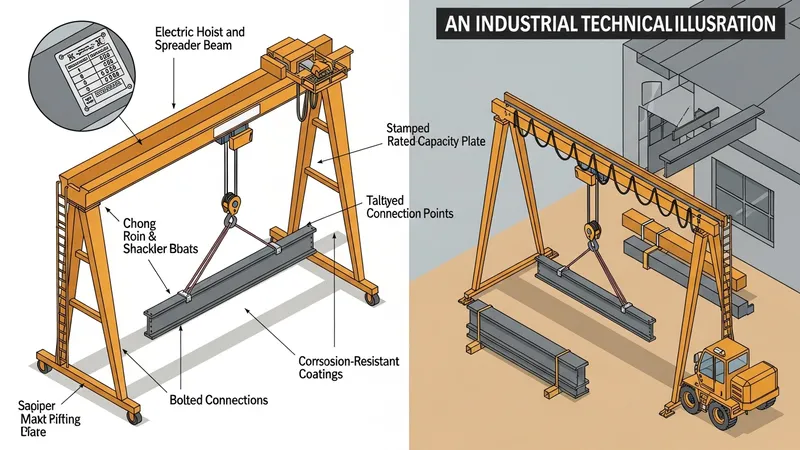
- Examples of lifting machines: tower cranes, overhead bridge cranes, and mobile hydraulic cranes — large-frame and mobile platforms used to place and move heavy loads in construction and plant settings.
- Examples of hoisting devices: electric chain hoists and wire-rope hoists — compact mechanisms that convert motor torque into vertical lift and are often integrated into trolleys or fixed mounts.
- Examples of slings and load attachments: synthetic web slings, wire rope slings, and chain slings — flexible connectors that distribute loads and interface between load points and lifting hooks; ancillary accessories include shackles, hooks, spreader beams, and lifting clamps.
Different machine types may be chosen for reach, mobility, or capacity. For instance, overhead bridge cranes typically provide long-span horizontal coverage within a building and can handle consistent repetitive lifts, while mobile cranes may be selected when site mobility and variable pickup positions are important. Hoists often integrate with crane trolleys or fixed points and may be preferred where compact vertical lift is needed. Attachment selection is influenced by load geometry and attachment points, and may affect lifting angle and effective capacity.
Basic load-handling principles include calculating applied load, evaluating load centers of gravity, and factoring sling angles and hitch configurations. Sling angle can significantly change tension in the leg of a sling; shallower angles may increase leg tension and reduce the safe working load. Load center shifts during pick-up or travel can create moment loads on the lifting structure, so anticipated load behavior and potential dynamic effects such as swinging or impact are typically considered when planning a lift.
Safety standards and industry guidance often set inspection intervals, rated capacities, and marking requirements. Visual checks before use can reveal wear, corrosion, or deformation, and periodic formal inspections may include nondestructive tests or certified load tests for critical components. Recordkeeping for inspection histories and any repairs may assist with traceability and help determine retirement criteria for slings or hoists showing cumulative damage or wear beyond acceptable limits.
Classification systems commonly group lifting equipment by capacity, mobility, or mounting type. Equipment may be rated into nominal capacity bands and service classes that reflect frequency and duty cycles; for example, devices subjected to frequent daily lifts may be assigned a higher service classification than those used intermittently. Matching service class, duty cycle, and environment can affect expected service life and maintenance needs, and manufacturers’ load charts and service recommendations are typically used as reference points.
In summary, understanding lifting systems requires attention to the mechanical components, load interactions, safety standards, and inspection practices that govern safe use. Considerations often include capacity matching, attachment selection, routine checks, and the operational environment. The next sections examine practical components and considerations in more detail.