
Lifting Equipment: Understanding Cranes, Hoists, Slings, And Accessories

Types of lifting machines, hoists, slings, and accessories
Large-scale lifting machines and smaller hoisting units present distinct trade-offs in capacity and mobility. Bridge and gantry cranes may offer continuous span coverage over work areas, while mobile hydraulic cranes provide flexibility in placement and reach. Electric hoists commonly integrate into fixed trolleys or overhead systems to lift loads vertically, whereas manual chain hoists may appear where power is unavailable. Slings vary by material: wire rope slings typically offer resistance to abrasion and high temperatures, synthetic slings can be lighter and less damaging to delicate surfaces, and chain slings may be selected for extreme heat or sharp-edged loads.
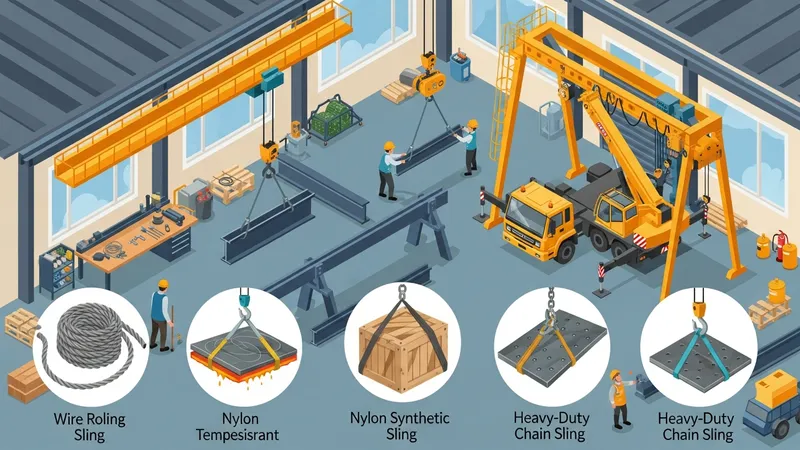
Accessories influence how loads are secured and positioned. Shackles and hooks provide direct connections and can be chosen for rated capacity and fit with sling eyes; spreader beams and lifting frames distribute load points to control the load attitude; and lifting clamps or magnets may be used where standard lifting points are absent. Selection often considers the load’s shape, attachment availability, and the need to avoid damage to the item being lifted.
Design and rating conventions often include safety factors and service classifications. Equipment rated for heavy or continuous duty may be constructed with higher fatigue resistance and more robust components. Load charts, rated capacities, and manufacturer-specified limits are typically consulted during planning. In many sectors, compliance with relevant industry or national standards may be an expectation for equipment selection and use.
Practical considerations can include site constraints such as headroom, floor load limits, and travel paths. For example, low headroom configurations of hoists may be chosen when vertical clearance is limited. Rigging plans often map intended travel paths and set exclusion zones to reduce risk to personnel. These elements may influence whether a fixed crane, portable crane, or a combination of hoist and spreader beam is most appropriate for a given task.