
Microsoft SSPM: Overview Of SaaS Security Posture Management Concepts

Microsoft SSPM: Implementation patterns and operational planning
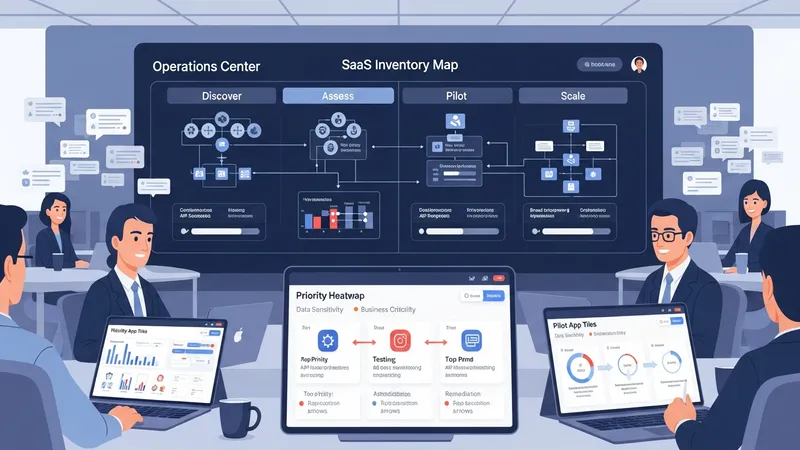
Implementing a SaaS posture program usually follows phased patterns: inventory and discovery, prioritized assessment, pilot remediation workflows, and scale. Initial inventories may reveal many SaaS instances, and teams often prioritize based on data sensitivity and business criticality. Pilot projects commonly focus on a handful of applications where API coverage is strong and owners are engaged. Lessons from pilots inform policies, connector configurations, and escalation templates to support broader adoption.
Operational planning should consider resource allocation for triage, remediation, and governance. Security teams may need to define SLAs for different finding severities and establish handoff procedures with application owners. Automated ticketing integrations can reduce manual work, but human review remains important for contextual decisions. Training and clear documentation for owners and reviewers help ensure that posture findings are interpreted consistently and that remediation actions match business needs.
Integrations with existing security tooling are practical facilitators of an effective posture program. Common integrations include SIEMs, ticketing systems, identity protection services, and configuration management databases. Linking posture findings into incident response workflows can help surface potential compromise scenarios earlier. When integrating, teams often evaluate data schema compatibility and ensure that identifiers (such as user IDs and object IDs) are consistently mapped across systems to support reliable correlation.
Scaling posture management involves continual reassessment of policies and measurement of program outcomes. Organizations often adopt iterative governance reviews that update baselines, refine scoring models, and expand connector coverage. Regularly scheduled program reviews—aligned with operational cycles such as major cloud migrations or application rollouts—help maintain relevance. Over time, mature programs balance automation with human oversight to keep pace with changing SaaS ecosystems and organizational priorities.