
Microsoft SSPM: Overview Of SaaS Security Posture Management Concepts

Microsoft SSPM: Risk detection, remediation, and governance considerations
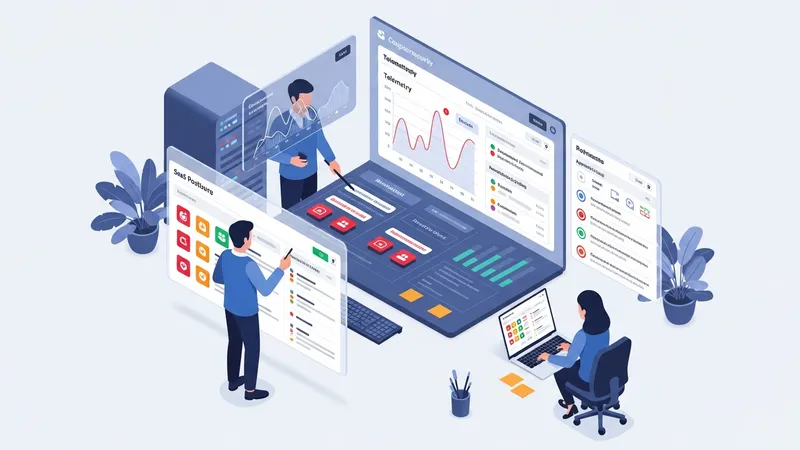
Risk detection in SaaS posture management combines static configuration checks with dynamic signals such as anomalous sign-ins or unusual data access. Correlating configuration findings with telemetry can change the priority of a finding: a permissive setting that has not been used may be less urgent than a similar setting tied to recent suspicious activity. In many programs, a small set of high-confidence indicators is used to reduce alert fatigue, and findings are triaged into categories that match available remediation resources and governance processes.
Remediation workflows vary by organization and by the type of finding. Simple misconfigurations may be automatically corrected or surfaced as remediation tasks in IT ticketing systems. More complex issues—such as entitlement redesign or cross-application integrations—may require multi-team coordination and approvals. Documenting remediation steps, dependencies, and decision rationale supports governance: it helps reviewers understand risk acceptance and provides a record for future posture reviews or audits.
Governance practices around SaaS posture management typically define roles, responsibilities, and escalation paths. A governance framework may specify who owns application risk, who approves configuration changes, and who signs off on exceptions. These role definitions can reduce turnaround time for remediation and clarify accountability. Governance processes may also address periodic reassessment, ensuring that posture measurements and policy mappings remain up to date as business use of SaaS evolves.
Operational considerations include measuring program effectiveness and iterating on controls. Common metrics include the number of high-priority findings over time, mean time to remediate, and coverage of critical applications. Programs often start with a small set of high-risk applications to validate processes before scaling. Continuous improvement cycles—driven by post-incident reviews and changing application landscapes—help keep posture efforts aligned with emerging threats and organizational priorities.