
Privileged Account Management Software: How It Supports Access Security And Compliance

Privileged account management software: operational practices and user workflows
Operational adoption typically involves inventorying privileged accounts, defining roles, and mapping existing administrative tasks to controlled workflows. Change management may be necessary to transition from manual practices to automated issuance and rotation. Training for administrators and reviewers is often required so users understand workflows, expected behavior, and how to access logs for investigations.
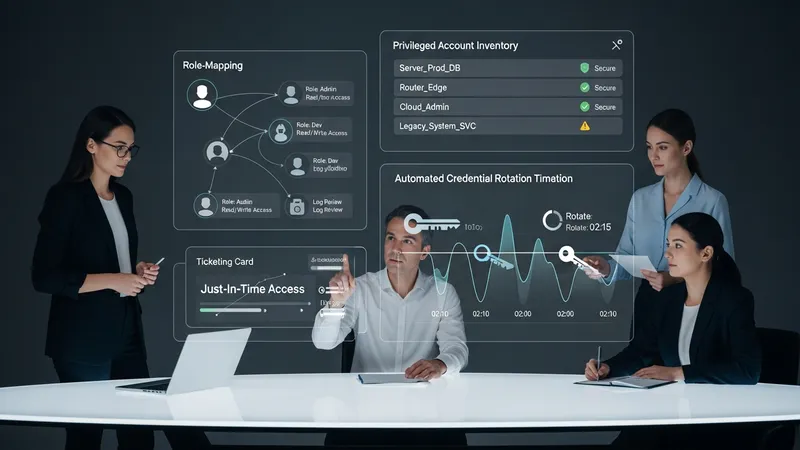
User experience design is a relevant operational factor: overly burdensome workflows can lead to workarounds, while transparent, integrated flows may increase adherence. Common practices include just‑in‑time access, session escalation for specific tasks, and temporary access objectives tied to ticketing systems. Balancing security controls with operational efficiency is a consideration organizations typically address through iterative rollout and metrics tracking.
Monitoring and incident response processes should incorporate privileged activity telemetry into wider security operations. Alerts for anomalous privilege use—such as out‑of‑hours sessions or unusual command patterns—can be fed into a security information and event management (SIEM) system. Playbooks for incident response often include steps to revoke temporary privileges, preserve session recordings, and conduct post‑incident reviews.
Ongoing maintenance practices include periodic access reviews, credential hygiene checks, and connector health monitoring. Access reviews may be scheduled quarterly or more frequently depending on risk appetite, and they typically require coordination between system owners and auditors. These operational considerations support sustained control effectiveness rather than being one‑time tasks.