
SaaS Security Posture Management: Core Capabilities And Security Controls Explained

Operational considerations and continuous monitoring for SaaS control health
Continuous monitoring is designed to detect changes that may alter an organization’s exposure between scheduled assessments. Sources often include provider change notifications, audit logs, configuration snapshots, and identity provider events. Effective monitoring solutions correlate these signals to reduce alert noise and to identify high-risk combinations, such as an elevated role assignment coinciding with disabled logging. Operational teams may prioritize tuning notification thresholds and integrating findings into incident response workflows to ensure timely attention to significant deviations.
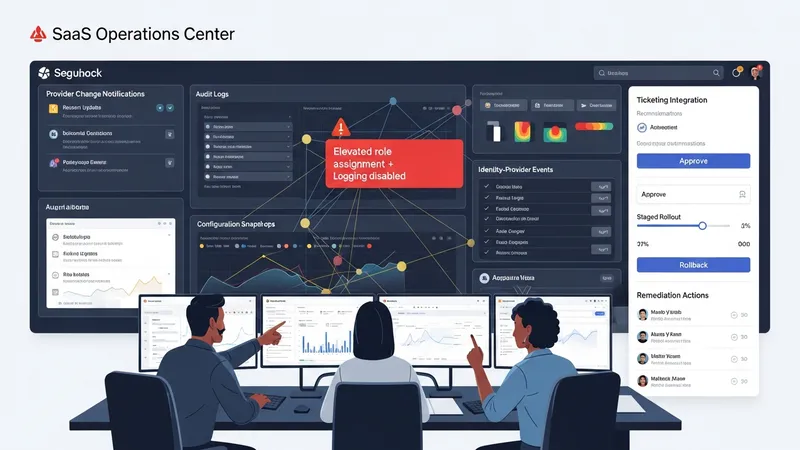
Remediation workflows vary from advisory guidance to automated enforcement, and the choice depends on organizational risk tolerance and the potential impact on users. Advisory workflows generate structured recommendations and integrate with ticketing systems so that owners can validate and apply fixes. Automated or partially automated remediation can shorten exposure windows but typically requires staged rollout, approvals, and rollback plans to prevent unintended disruption. Maintaining clear audit trails for remediation actions supports accountability and post-change review.
Scalability considerations include managing rate limits on provider APIs, handling multiple tenants or organizational units, and normalizing heterogeneous configuration models. Effective implementations use connector orchestration, caching strategies, and careful scheduling to avoid crossing provider thresholds while maintaining timely visibility. Teams may adopt sampling or prioritized scanning approaches for very large estates, focusing more frequent checks on high-risk services or configurations while scheduling broader scans less often.
Program governance encompasses roles, responsibilities, and metrics to measure the effectiveness of posture efforts. Common metrics include number of high-severity findings, time-to-remediate, and coverage of critical applications. Governance arrangements may define who reviews findings, who authorizes automated enforcement, and how exceptions are managed. Over time, these governance practices support continuous improvement by identifying recurring failure modes and informing decisions about control investments and process changes.