
SaaS Security Posture Management: Core Capabilities And Security Controls Explained

Compliance checks and policy mapping within SaaS security posture efforts
Translating regulatory or internal control requirements into technical checks requires creating mappings between control objectives and observable SaaS artifacts. For example, a requirement to restrict public data sharing can be mapped to checks of sharing defaults, link-scanning settings, and external collaborator lists. These mappings are typically documented so that audit reviewers can follow the rationale behind each check. Organizations often start with a focused set of controls most relevant to their risk profile and broaden coverage as processes mature and additional evidence is needed for assessments.
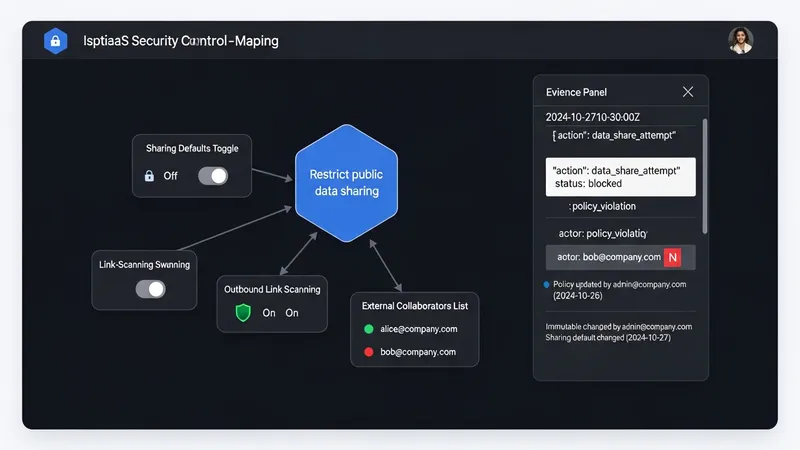
Evidence collection strategies aim to preserve context such as timestamps, API responses, and the identities of accounts that made changes. Captured evidence may be retained for defined periods consistent with internal retention policies and regulatory expectations. When controls are automated, change logs and remediation steps provide traceability for auditors. Reporting functionality can be configured to produce control matrices that align checks to specific clauses or requirements in frameworks commonly used for cloud and SaaS governance.
Framework alignment often leverages established standards or control families rather than attempting to create platform-specific rule sets for every requirement. Mapping to control families such as access control, change management, and logging can simplify coverage and reporting. This approach allows organizations to reuse evidence collected for multiple frameworks and to reduce duplication of effort. Regular reviews of mappings are commonly performed to ensure that changes in vendor features or organizational policy are reflected in control checks.
Maintaining compliance posture frequently involves exception management and documented compensating controls when strict enforcement is not immediately feasible. Exception processes document the rationale, duration, and mitigations for deviations from baseline controls. Over time, exception trends can inform prioritization of remediation work and highlight areas where engineering changes or process adjustments may be needed. The goal of these practices is to ensure that evidence-based decisions guide control deployment and that auditability is preserved.