
SaaS Security Posture Management: How It Helps Organizations Monitor And Reduce SaaS Risk

Configuration assessment and misconfiguration detection for SaaS platforms
Configuration assessment tools scan application settings and compare them to policy templates or security benchmarks to identify deviations that may increase exposure. Since SaaS platforms differ in settings and terminology, assessment tools typically normalize findings into categories such as access controls, sharing, encryption settings, and integrations. Teams may choose to enforce only a core subset of settings continuously, with broader checks scheduled less frequently. Consideration: align assessment baselines with organizational risk tolerance and regularly update templates to reflect platform feature changes.
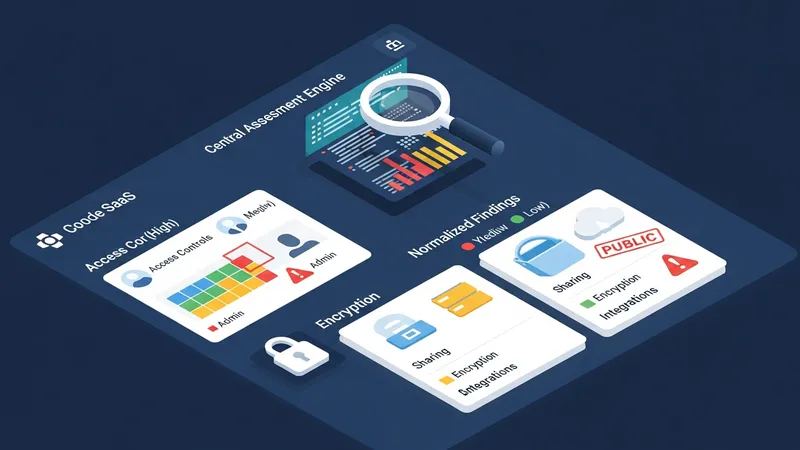
Misconfiguration detection often emphasizes high-impact controls such as public resource exposure, broadly permissive roles, or disabled security features. Detection can be automated to run on a schedule or triggered by configuration change events. Many organizations prioritize remediations by estimated impact and likelihood, such as addressing publicly accessible storage or administrator role misassignments before lower-risk issues. Assessment outputs frequently include remediation suggestions that platform owners can use to correct settings.
Operational patterns that reduce repeated misconfigurations include enforcing standardized deployment templates and using automation to apply secure defaults. While automation may minimize human error, it can also propagate a mistaken setting at scale if not properly tested. Therefore, a typical safeguard is to stage configuration templates in non-production environments and to include configuration reviews in change management pipelines before broad rollout.
Practical tips as considerations: maintain a catalog of high-priority applications, schedule periodic reassessments, and track when specific misconfigurations recur to identify systemic causes. Integration with incident response or ticketing systems can help ensure that discovered issues are assigned and tracked to resolution. Over time, organizations often refine detection thresholds and baseline policies to reduce false positives and focus on the most material configuration risks.