
Understanding Serviced Apartments: Key Differences From Hotels And Traditional Rentals

Serviced apartments are furnished residential units offered with hotel-like services and the facilities of a rental property. They typically provide a self-contained living space—sleeping area, kitchen or kitchenette, and living area—combined with managed services such as reception, maintenance, and periodic cleaning. The model is positioned between transient hotel stays and traditional longer-term rentals: occupants often retain more domestic features than a hotel, while retaining shorter commitments than a standard residential lease.
These accommodations can be operated by hospitality groups, specialised serviced-apartment managers, or independent landlords offering managed short- to medium-term lets. Contract terms may vary from nightly to monthly arrangements, and included services (utilities, linen, internet, cleaning) often differ by operator. The level of formality in booking, payment, and documentation can also diverge from typical residential tenancies, affecting deposits, notice periods, and invoicing practices.
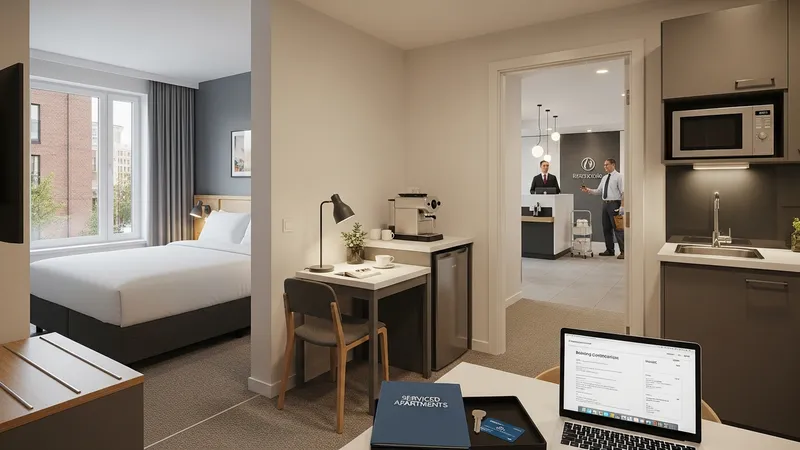
- Branded or chain serviced apartments: professionally managed units linked to hospitality operators, typically offering standardised furnishings and a managed front desk.
- Aparthotels (apartment hotels): properties combining hotel reception and centralised services with apartment-style units; often marketed for short- to medium-duration stays.
- Corporate housing / temporary corporate accommodation: units provided for business travellers or relocating staff, usually furnished and billed on a monthly basis with some services included.
Compared with hotels, serviced apartments typically prioritise in-unit living features such as kitchens and larger living spaces; compared with traditional rentals they often offer shorter minimum stays and bundled services. Booking channels can range from direct operator platforms to third-party marketplaces; contractual clarity about utilities, cleaning schedules, and damage deposits may vary. Legal classification can differ by jurisdiction, which can influence taxation, zoning, and permitted short-term use. These distinctions mean that availability, pricing structure, and guest expectations may shift depending on operator type and local regulation.
Operationally, housekeeping and service levels may be scheduled rather than continuous: many serviced apartments include weekly or biweekly cleaning by default, with options for additional housekeeping at extra cost. Reception and maintenance support can be available during limited hours or 24/7 depending on property design and management model. Security arrangements may include key-card access, CCTV in common areas, and on-site staff. Users often balance the convenience of managed services against the privacy of a self-contained apartment and should note how service frequency and scope can affect overall cost.
Price presentation for serviced apartments often uses multiple billing models: nightly rates for short stays, weekly or monthly tariffs for extended occupancy, and sometimes tiered pricing based on included services. Monthly billing may incorporate utility allowances, internet, and periodic housekeeping; by contrast, nightly bookings may include cleaning fees and local taxes added at the time of reservation. Because operators set their own inclusions, comparison on a like-for-like basis requires attention to what is bundled—furniture, linens, utilities, internet, and management fees all influence the total cost of occupancy.
From a suitability perspective, serviced apartments may appeal when occupants need more living space, a kitchen, or a setup conducive to remote work for periods that are longer than a typical hotel stay but shorter or more flexible than a conventional lease. They may also serve temporary workplace relocations, project assignments, or transitional housing needs. Regulatory and tax treatment can differ by city and country, and in some markets operators register differently than hotels or long-term rentals; these distinctions can affect consumer protections, registration requirements, and local charges.
In summary, serviced apartments occupy an intermediate position between hotels and traditional rentals: they combine residential features with managed services, offer a range of booking durations, and are provided through varied operating models such as branded chains, aparthotels, and corporate housing. Selection and cost depend on included services, contract length, and local regulatory context. The next sections examine practical components and considerations in more detail.