
Lifting Equipment: Understanding Cranes, Hoists, Slings, And Accessories

Load-handling principles and performance considerations for lifting systems
Fundamental load-handling principles hinge on understanding weight, center of gravity, sling angles, and potential dynamic forces. Calculating the effective load on each sling leg may involve resolving forces based on hitch type and sling angle; as the angle from vertical increases, tensile forces in the sling legs typically increase. Anticipated dynamic factors such as acceleration, deceleration, or impact loads during set-down can raise peak loads above static weight and are often estimated and accounted for in planning.
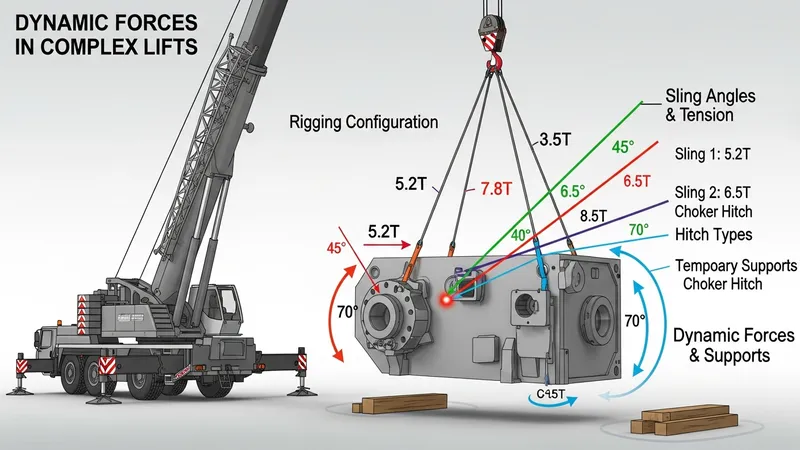
Load center and stability influence selection and placement of lifting points. When a load has an eccentric center of gravity, lift points and spreaders may be arranged to control rotation. The geometry of the load may create pinch or crush zones during lifting and setting, so spatial assessment and temporary supports may be used to maintain stability. Load rotation or sway can be limited with taglines, softeners, or controlled travel paths, bearing in mind that each control introduces interaction forces that may change overall loading.
Performance considerations for hoists and cranes include duty cycle, thermal management, and drive systems. Continuous or high-frequency operations may demand motors and brakes sized for repeated use and cooling arrangements to avoid overheating. Brake selection and regular brake testing are typically part of maintaining predictable stopping behavior. Gear reduction, gearbox lubrication, and electrical controls can also affect smoothness of movement and responsiveness to operator inputs.
Operational environment may impose constraints on materials and design. Corrosive atmospheres, extreme temperatures, dust, or hazardous-area classifications may lead to different material choices, protective coatings, or specialized enclosures for electrical components. Environmental conditions can alter inspection intervals and may necessitate specialized attachments or protective measures for slings and hoists to preserve rated capacity and functional reliability.